
Exercise and Osteoporosis Drugs Protect Astronauts' Spine Bones During Space Missions: Study Shows
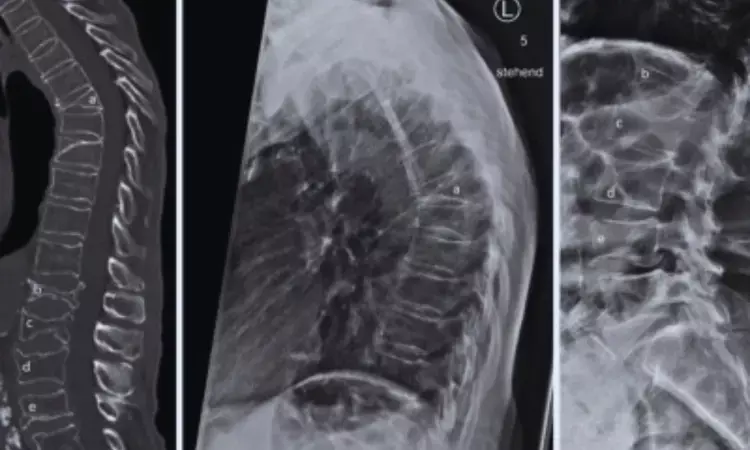


USA: Researchers have reported that targeted in-flight countermeasures, particularly resistive exercise with or without osteoporosis medication, can help preserve the microarchitecture of the lumbar spine in astronauts during long-duration space missions.
The findings are from a study published in Archives of Osteoporosis by K. D. Anderson of Emory University School of Medicine, Atlanta, and colleagues, highlighting the added value of trabecular bone score (TBS) alongside standard bone mineral density (BMD) assessments.
Bone loss is a well-recognized challenge of prolonged exposure to microgravity. Astronauts experience accelerated skeletal deterioration, especially in weight-bearing regions such as the spine and hip. To monitor and mitigate these effects, NASA routinely performs preflight and postflight dual-energy x-ray absorptiometry (DEXA) scans. While BMD provides information on bone quantity, TBS—derived from DEXA images—offers insight into trabecular bone microarchitecture, an important determinant of bone strength and fracture risk.
In the analysis, researchers evaluated DEXA scans from 51 astronauts who completed approximately six-month missions aboard the International Space Station (ISS). The cohort included 41 men and 10 women, ranging in age from the late 30s to mid-50s. Participants were grouped based on the countermeasures available during their missions: those who flew before the introduction of the advanced resistive exercise device (ARED), those with access to ARED, and those who used ARED in combination with bisphosphonate therapy. ARED is designed to simulate weightlifting in microgravity and has become a cornerstone of in-flight exercise programs.
The following findings were reported:
- Astronauts who flew missions before the availability of the advanced resistive exercise device experienced a significant postflight decline in lumbar spine bone mineral density.
- Astronauts with access to the advanced resistive exercise device showed smaller losses in lumbar spine bone mineral density, while those combining the device with bisphosphonate therapy largely maintained or slightly increased bone mineral density.
- A significant reduction in trabecular bone score was observed only among astronauts without access to the advanced resistive exercise device.
- Astronauts who used the advanced resistive exercise device, with or without bisphosphonates, showed no significant deterioration in trabecular bone score, indicating preservation of trabecular bone microarchitecture during spaceflight.
- This study represents the first use of trabecular bone score to assess spaceflight-related changes in lumbar spine trabecular integrity.
- Longitudinal analyses indicated that longer-duration missions were associated with gradual declines in both bone mineral density and trabecular bone score, particularly with advancing age.
The authors note several limitations, including the small number of female astronauts and the inability to account for hormonal influences that may affect bone health. They also emphasized that longer missions to the Moon or Mars will provide further opportunities to understand skeletal adaptation to spaceflight.
"Overall, the study supports integrating TBS into routine astronaut bone health monitoring. By providing additional information on bone quality without extra radiation exposure, TBS may enhance fracture risk assessment and help evaluate existing and future countermeasures aimed at protecting skeletal health during long-duration space exploration," the authors concluded.
Reference:
Anderson, K.D., Spector, E.R., Ploutz-Snyder, R. et al. The effects of spaceflight countermeasures on trabecular bone score (TBS) of the lumbar spine. Arch Osteoporos 21, 24 (2026). https://doi.org/10.1007/s11657-025-01624-2

Next Story