
High Incidence of thromboembolic events in women with cancer undergoing controlled ovarian hyperstimulation
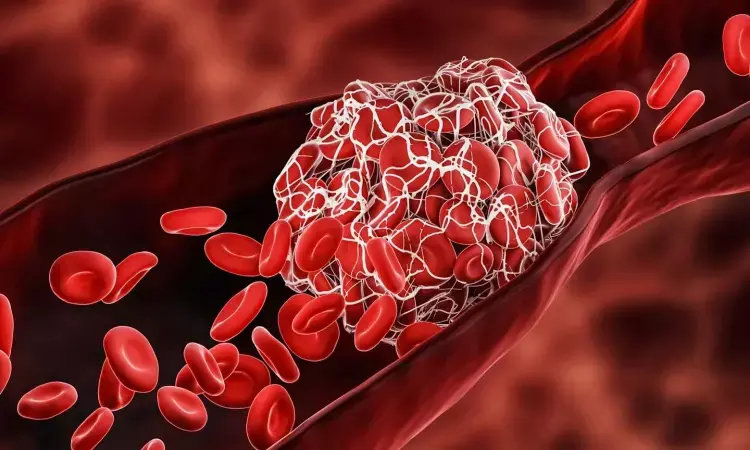


Numerous studies have established that thrombosis is a common complication for cancer patients, contributing to the second-leading cause of mortality in cancer patients. Thrombotic complications in cancer can vary from arterial or venous thromboembolism to disseminated intravascular coagulation. Despite the well-known association between cancer and thromboembolic disease, the mechanisms that promote thromboembolic events in cancer patients are not clear and appear to be multifaceted. Cancer patients are generally in a hypercoagulable or prothrombotic state, as they usually present with abnormalities in each component of Virchow's triad, thus contributing to thrombosis. The three components are a stasis of blood flow, endothelial injury, and hypercoagulability, the latter including abnormalities in the coagulation and fibrinolytic pathway and platelet activation.
Controlled ovarian hyperstimulation is a technique used in assisted reproduction involving the use of fertility medications to induce ovulation by multiple ovarian follicles. These multiple follicles can be taken out by oocyte retrieval (egg collection) for use in in vitro fertilisation(IVF), or be given time to ovulate, resulting in superovulation which is the ovulation of a larger-than-normal number of eggs, generally in the sense of at least two. When ovulated follicles are fertilised in vivo, whether by natural or artificial insemination, there is a very high risk of a multiple pregnancy.
The study by Melo, V.D., Liseth, O.Y., Schmidt, W.M. et al aimed to evaluate the risk factors and incidence of thromboembolic events among adult women with cancer who underwent controlled ovarian hyperstimulation (COH) for fertility preservation.
Retrospective, descriptive cohort analysis of patient demographics, medical history, cancer type/treatment, laboratory values, thrombosis within 6 months of COH was conducted.
4 of 127 study participants experienced a venous thromboembolic event within 6 months of COH. The median time between oocyte aspiration and the event was 0.25 years (range = 0.10–0.50). The average age at time of event was 25.3 years (SD = 5.3).
Three of four thrombotic patients had ovarian cancer, one had breast cancer. All had received surgery and chemotherapy for treatment.
All underwent an antagonist cycle ovarian stimulation protocol — none developed ovarian hyperstimulation syndrome.
The average anti-mullerian hormone level at the time of hyperstimulation in the thrombosis group was 1.6 (SD = 1.3), compared to 3.6 in the non-thrombosis group. The average max estradiol level reached during ovarian stimulation was 1281.3 (SD = 665.3) in the thrombosis group and 1839.1 (SD = 1513.9) in the non-thrombosis group. Thromboembolic events were not directly associated with mortality.
Within this small descriptive study, the incidence of thromboembolic events in women with cancer undergoing COH for fertility preservation is high. Cancer may play a greater role than COH in thrombosis risk. Ovarian cancer patients who undergo ovarian stimulation may have an increased risk compared to other cancer types. These findings may inform future, prospective studies to determine the role of thromboprophylaxis.
Source: Melo, V.D., Liseth, O.Y., Schmidt, W.M. et al. Risk of thrombosis in women with cancer undergoing controlled ovarian hyperstimulation for fertility preservation. J Assist Reprod Genet (2022). https://doi.org/10.1007/s10815-022-02661-3


Next Story