
Dual Immune Checkpoint Blockade Cuts Rejection Risk in Kidney Transplant Patients: Study Reveals
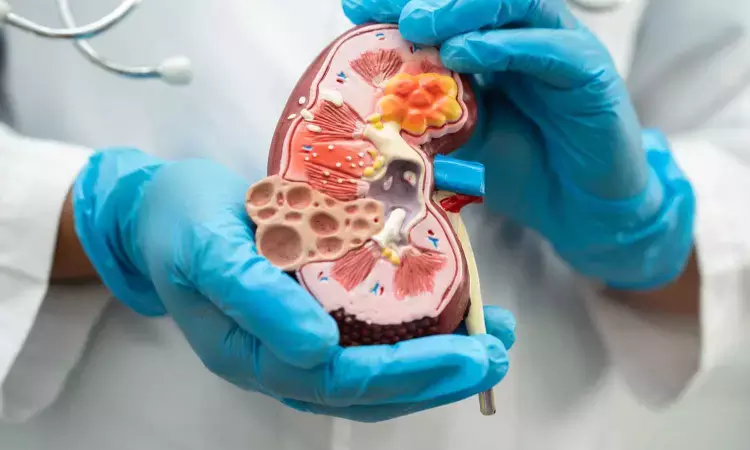
Illegal Kidney Transplant


USA: A novel immunosuppressive approach using two targeted biologic agents may offer a safer alternative to conventional long-term drug regimens for kidney transplant recipients, according to a phase 2a clinical trial published in the American Journal of Transplantation. The study was led by Dr Flavio Vincenti from the Department of Medicine and Department of Surgery at the University of California, San Francisco, along with his colleagues.
Kidney transplant patients typically require lifelong daily immunosuppressive medications, most commonly calcineurin inhibitors and corticosteroids. While these drugs have improved short-term graft survival, their long-term use is associated with kidney toxicity, metabolic complications, increased infection risk, and poor adherence. Researchers are therefore exploring more selective, less toxic therapies that could maintain graft survival without daily oral medication.
In this early-stage trial, investigators evaluated a dual costimulation blockade strategy combining dazodalibep, a CD154-specific fusion protein, with belatacept, a CD80/86 inhibitor. Together, these agents selectively block immune pathways involved in transplant rejection. The regimen was tested as the sole maintenance therapy following kidney transplantation, without routine use of calcineurin inhibitors or steroids.
The open-label, single-arm study enrolled 23 adult patients undergoing their first kidney transplant from either living or deceased donors. All participants received induction therapy with thymoglobulin and corticosteroids at the time of transplantation. Dazodalibep and belatacept were administered intravenously starting on day one after surgery and continued at scheduled intervals through 48 weeks, followed by a 12-week safety monitoring period.
The researchers reported the following findings:
- Early rejection in two of the first three patients led to protocol changes, including a higher thymoglobulin dose and revised biologic dosing.
- The updated regimen was applied to 20 patients who were included in the efficacy analysis.
- Treated biopsy-proven acute rejection occurred in 25% of patients at weeks 12, 24, and 48.
- No cases of antibody-mediated rejection were observed during follow-up.
- Kidney function remained well preserved, with a mean eGFR of 71.3 mL/min/1.73 m² at week 48.
- Renal function was comparable in patients with and without rejection.
- Kidney function recovered after standard rescue therapy in patients who experienced rejection.
- Nearly all patients reported at least one treatment-emergent adverse event.
- No thrombotic events were recorded during the study.
- Both patient survival and graft survival were 100% at the end of follow-up.
Although the study did not meet its predefined composite efficacy endpoint and was limited by a small sample size, the authors emphasize that this was the first clinical trial to test dual costimulation blockade as a standalone maintenance therapy in organ transplantation. They conclude that this biologic-only strategy appears feasible, generally safe, and well tolerated, and it opens the door for larger trials to refine dosing, improve efficacy, and potentially transform long-term immunosuppression in kidney and other solid organ transplants.
Reference:
Vincenti F, Shoji J, Wojciechowski D, Kim J, Xu W, Wilson TM, Kirk AD. Dual costimulation blockade with the CD154-specific fusion protein dazodalibep and belatacept for prophylaxis of kidney allograft rejection. Am J Transplant. 2026 Feb 3:S1600-6135(26)00003-1. doi: 10.1016/j.ajt.2025.12.290. Epub ahead of print. PMID: 41638945.

Next Story